 Inflatable Kayak for 2 People with Detachable Canopy, Reinforced Paddles 2-person
 $99.97 View on Amazon
Sizing specs: Inflatable Kayak for 2 People with... Comparisons
Quick answerFor most warm-water recreational paddlers a sit-on-top like the Pelican Sentinel 80X (about $381) is better because it self-drains, is easier to fall off and climb back on, and needs no skirt; choose a sit-in like the Pelican Argo 100X EXO (about $400) if you paddle cooler water or want more protection from wind and spray.
A sit-on-top kayak is easier to get on and off, self-drains any water that comes aboard, and is the more forgiving hull for warm-water recreational paddling. A sit-in kayak keeps you drier, blocks wind and spray better, and gives you more enclosed storage. For most people paddling lakes and slow rivers in warm months, the sit-on-top, such as the Pelican Sentinel 80X at about $381, is the better default. Paddlers dealing with cold water, wind, or long enclosed storage needs should look at a sit-in like the Pelican Argo 100X EXO at about $400.
A sit-in kayak has an enclosed cockpit; your legs sit inside the hull below deck level, so you stay drier and more protected from wind, but water that splashes in has to be bailed or pumped out and getting back in after a capsize takes practice. A sit-on-top kayak has a molded seat well on top of a sealed hull; your legs rest on the deck in the open, water that comes aboard drains out through scupper holes in the floor, and remounting after a fall is closer to climbing onto a raft than re-entering a cockpit.
Both hull styles can be stable or tippy depending on width and design, but sit-on-tops generally feel more secure to new paddlers because you can see the water around you, shift your weight freely, and are never worried about being trapped inside a flooded cockpit. Sit-in kayaks with a narrower beam built for speed and tracking can feel tippier to a beginner, though wider recreational sit-in models like the Pelican Argo 100X are stable enough for most casual paddlers.
The sit-in wins here. An enclosed cockpit blocks spray, wind, and splashing, and paired with a spray skirt it keeps cold water off your lower body almost entirely. A sit-on-top exposes your legs and seat to sun, splash, and any water that pools before it drains, which is fine on a warm afternoon but uncomfortable in cold water or cool weather. Anyone paddling in cold water should treat hull choice as secondary to wearing a wetsuit and a properly fitted PFD, since cold water is the real hazard, not the hull style.
| Category | Sit-in | Sit-on-top |
|---|---|---|
| Example hull | Pelican Argo 100X EXO, 10', 275 lb max | Pelican Sentinel 80X, 8' |
| Dryness | Drier, cockpit blocks spray | Legs exposed, gets splashed |
| Self-rescue after a flip | Harder, requires bailing or a pump | Easier, water drains through scupper holes |
| Storage | Enclosed hatch, keeps gear dry | Open tank well, gear can get wet |
| Wind and cold protection | Better with a spray skirt | Little protection, best in warm weather |
| Beginner comfort | Can feel confining to new paddlers | Open and easy to understand |
| Good with a dog aboard | Harder, less open space | Easier, open deck and tank well |
| Typical price, hard-shell rec kayak | About $400 to $600 | About $380 to $600 |
| Inflatable equivalent | Most inflatable kayaks, like the Intex Explorer K2 | Purpose-built inflatable sit-on-top, like the Intex Dakota Quest, 352 lb max |
Choose a sit-on-top like the Pelican Sentinel 80X if you paddle warm lakes or slow rivers, want the easiest possible remount if you tip over, or plan to bring a dog or a cooler on the open deck. It is the more forgiving choice for beginners and for anyone who wants to hop in and out casually rather than climb in and out of a cockpit.
Choose a sit-in like the Pelican Argo 100X EXO if you paddle in cooler water, want protection from wind and spray on longer trips, or want enclosed hatch storage that keeps a phone or lunch dry. If you want the enclosed feel of a sit-in without the weight of a hard shell, most inflatable kayaks such as the Intex Explorer K2 use the same sit-inside layout in a package that packs into a duffel bag.
Whichever hull you choose, wear a properly fitted, USCG-approved PFD and check the water temperature before you launch. Cold water is dangerous regardless of hull style, and a sit-on-top's easier self-rescue does not replace basic cold-water precautions.
An even spread across the price range, cheapest to premium. Prices at last check.
Inflatable Kayak for 2 People with Detachable Canopy, Reinforced Paddles 2-person  INTEX Explorer Kayak 2-Person Portable Set w/Paddles & Pump, 2-Pack 10'4" / 400 lb max / 2-person
  Aqua Marina Tomahawk Air-K Inflatable Touring Kayak, 1 Person, 12 Ft 4 In 12'4" / 1-person
 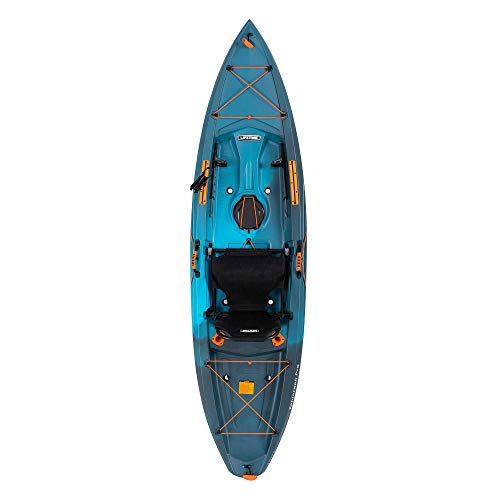 Lifetime Tamarack Pro 103 Sit-On-Top Kayak, Lightning Fusion, 10 ft. 3 in. 10'
  Perception Kayaks - 13.5 Tandem Kayak - Sit on Top - Large Rear Storage with Tie Downs - 13.5 ft - Deja Vu 13'6" / 500 lb max / 2-person
  Oru Haven Foldable Kayak | for 1 or 2 People - Stable, Durable, Lightweight - Lake and River Kayaks - Beginner, Intermediate - Size (Unfolded): 16'1" x 33", Weight: 41 Lbs, Black 16'1" / 2-person
 The picks from this page with current prices, in one email, so you can decide later.
Used only to send the list.For most recreational paddlers on warm lakes and slow rivers, sit-on-top is better because it self-drains, is easier to remount after a fall, and feels less confining. Sit-in kayaks are better if you paddle cooler water, want protection from wind and spray, or want enclosed dry storage. Neither is universally better; the right choice depends on water temperature and how you plan to use the boat.
Not necessarily. Stability depends mostly on hull width, not on whether the cockpit is open or enclosed. A wide sit-on-top and a wide sit-in recreational kayak can be equally stable. Sit-on-tops simply feel more secure to beginners because the paddler can see the water, move freely, and never worries about a flooded, enclosed cockpit.
A little water on deck is normal and drains out through molded scupper holes in the floor. The sealed hull underneath stays dry and keeps the kayak afloat even with some water on the seat well. This self-draining design is the main reason sit-on-tops are considered easier and safer for casual, warm-water paddling.
Sit-on-top hulls generally give more open deck space to move and cast from, which is why many dedicated fishing kayaks use that layout. This site covers recreational paddling rather than fishing-kayak setups, so for angling-specific features look at a kayak built and reviewed for that purpose.
Weight and length matter more than cockpit style. Hard-shell sit-in and sit-on-top kayaks of similar length weigh roughly the same and need the same roof rack or trailer setup. Inflatable versions of either style pack down into a duffel bag and are far easier to transport than any hard-shell hull.
Yes, it is usually the easier starting point. The open layout makes it simple to understand, remounting after a fall is straightforward, and there is no risk of feeling trapped in a flooded cockpit. Most instructors recommend sit-on-top kayaks for a first-time paddler's introductory outings on calm, warm water.
On the water: Wear a properly fitted, USCG-approved life jacket every time, dress for the water temperature rather than the air, and check your state and local paddling regulations before you launch.
This is researched general information, not professional advice. Sizing figures are starting points: confirm against the maker's own sizing chart and the capacity printed on the boat or board.